
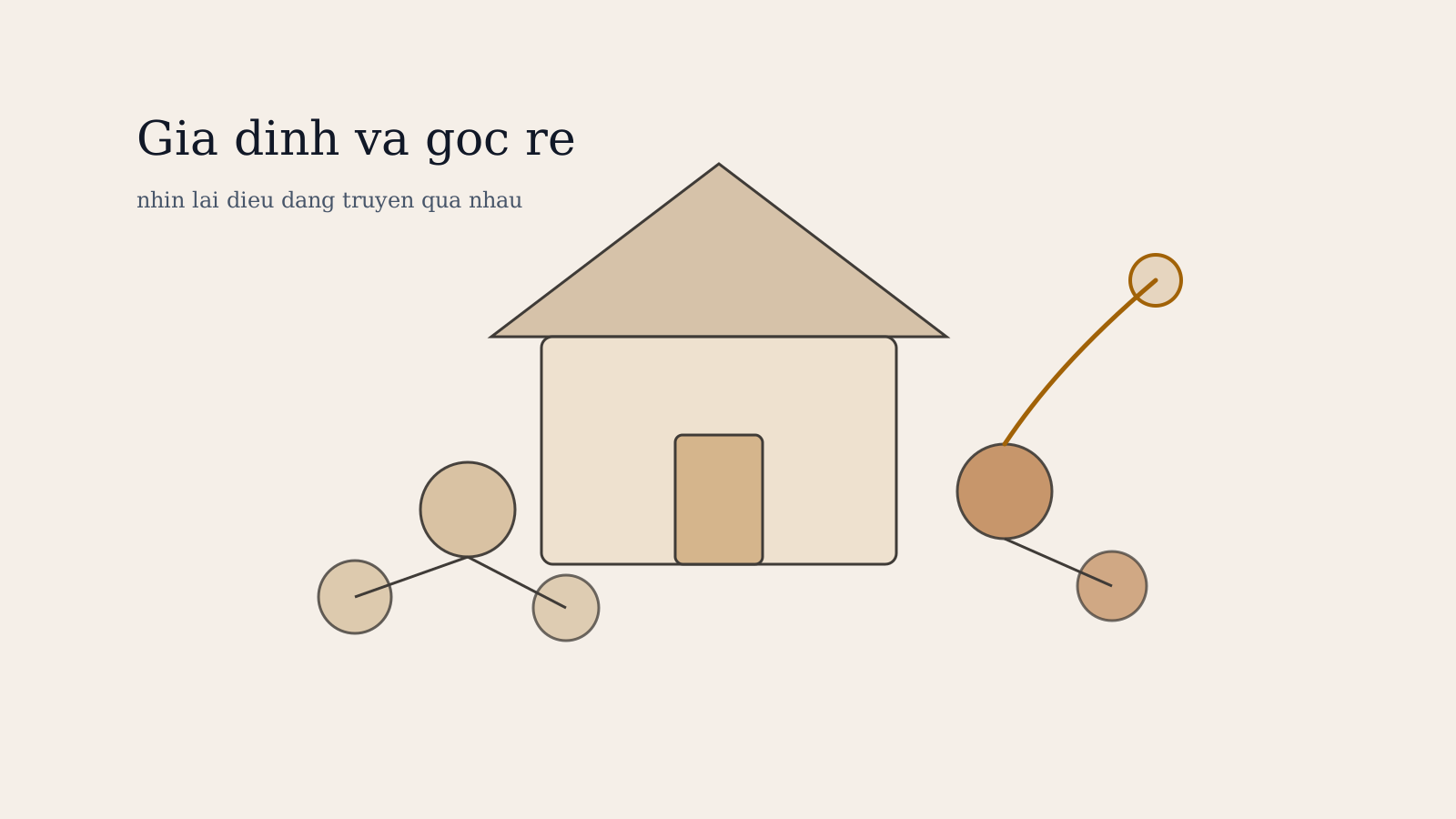
There are things we do that surprise even us: a phrase that bursts out exactly like our mother's, a way of withdrawing exactly like our father's, a worry about money with no clear origin. This is not random. The family is the first environment where we learn how to be a person — and most of that learning is loaded in before we have language to argue with it.
An important thing to say up front: looking at the family system is not about condemning your parents. They too are running reactions that were passed to them, from those before. The goal is not to find a culprit, but to find the point where the chain can stop with you — so you don't pass on to the next generation what you never chose.
The family is a system, not a group of people
In a system, each person acts not independently but according to roles and unspoken rules. When one person changes, the whole system shakes. This explains why a few days back home pulls you automatically into an old role — the good child, the peacemaker, the rebel, the invisible one — even though out in the world you have become a different person. The system has its own gravity.
Five things passed across generations
- Core beliefs. "You must be strong to be loved", "money is dangerous", "trust no one" — lines no one says outright, yet the whole family lives by.
- How emotions are handled. Is your family allowed to be sad, allowed to be angry, or are all hard emotions cleared away with silence or busyness.
- Life roles. Each person is assigned a role from childhood, and it sticks into adulthood.
- How love is shown. Is love in your family expressed through words, deeds, sacrifice, or control.
- The unspeakable. Every family has topics that "must not be touched". Those forbidden zones often hold the most energy.
Mapping your family system
Take a sheet of paper. You don't need to be an expert, only honest. Here is how to begin:
- Draw three generations. You, your parents, your grandparents (if known). Next to each, write one word for how they handle difficulty.
- Find what repeats. Which pattern appears across generations: the same fear, the same way of withdrawing, the same kind of sacrifice.
- Circle the reactions you carry. Which of those run in you today.
- Separate "mine" from "handed down". Which reactions truly fit the person you want to live as, and which are only an inheritance you never chose.
Four practices to untangle — in real life
- Set soft boundaries. You can love someone without agreeing with everything they do. A boundary is not a wall, but the place where you know what is you and what is them.
- Exit the old role gently. Next time you're home, pick a familiar situation and react a little differently — no announcement, no fight, just do it differently.
- Ask one real question. Ask a parent or elder one question about their youth. Understanding their circumstances often softens resentment without requiring them to apologise.
- Write what you won't send. Write a letter you will not send, saying everything unsaid. The goal is for you to hear it, not to change the other person.
A one-line chain-closing statement
In my family, [what is transmitted] has crossed generations. I receive it, understand why it was once needed, and I choose [the new thing] so I do not pass on [the old thing] to those who come after.
Three misconceptions to avoid
- "You must confront to heal it." No. Most untangling happens inside you, with no need for a showdown with the family.
- "Once you understand, you must forgive immediately." Forgiveness is a process, not an obligation. You are allowed to go slowly.
- "Untangling a loop means cutting ties." Often the opposite — as the old role loosens, you can come closer to your family in a more honest way.
This piece shares self-practice. If your family carries severe trauma or abuse, or you feel overwhelmed looking back, walk with a mental health professional. It does not replace therapy or professional support.